Artificial Intelligence has transformed how organizations work. From writing code and analyzing legal documents to handling financial reports and customer data, LLMs are now deeply integrated into enterprise workflows.
But this week, the AI community was reminded of a critical reality:
The real vulnerability in AI isn't always the model, it's the workflows that govern how information is shared, stored, and accessed.
Recent reports claimed that Anthropic's Claude was "leaking" private conversations after users discovered Claude chat links appearing in Google Search. While the headlines sounded alarming, the technical reality is more nuanced and more important to understand.
What Actually Happened?
Contrary to viral social media posts, Anthropic did not suffer a database breach or hack.
Instead, the issue revolved around Claude's Share Conversation feature.
When users clicked Share, Claude generated a public webpage containing that conversation.
The expectation for many users was:
"Anyone with the link can view this."
However, what actually happened was:
- Public share pages were accessible on the internet.
- Some of these pages were indexed by Google and Bing.
- Searching
site:claude.ai/sharesurfaced hundreds of shared conversations. - Clicking those links allowed anyone to read the shared conversation.
This wasn't private chat history escaping Anthropic's systems.
It was publicly shared content becoming publicly discoverable.
Why Did Search Engines Index Them?
Search engines continuously crawl publicly accessible webpages.
Normally, websites prevent sensitive pages from appearing in search results using mechanisms like:
noindexmeta tagsX-Robots-TagHTTP headers- robots.txt (for crawl guidance)
Reports suggest Claude's shared pages lacked appropriate noindex instructions, allowing search engines to treat them as ordinary public webpages.
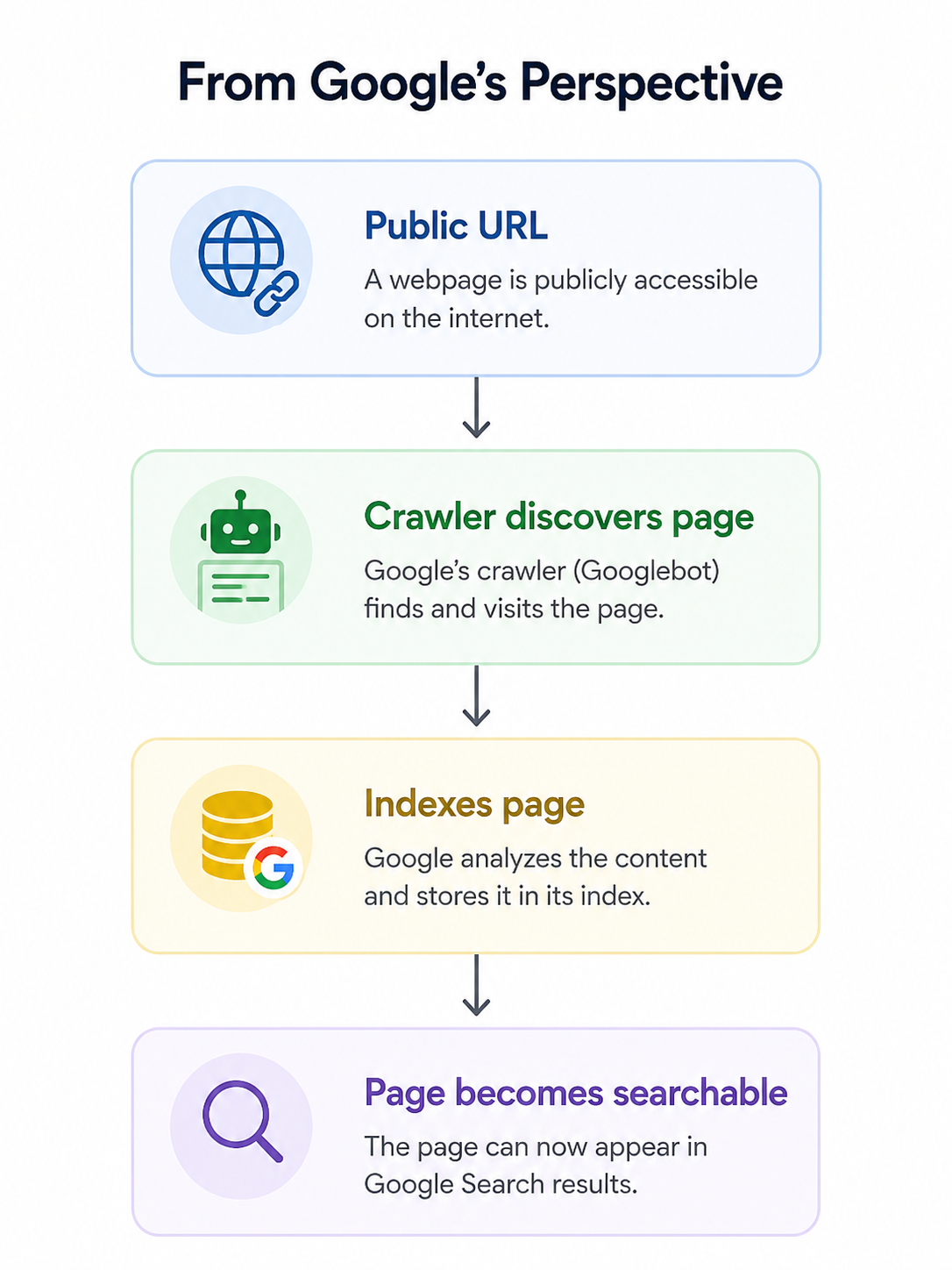
Figure 1. How a publicly accessible AI conversation becomes discoverable through search engine indexing.
The AI wasn't leaking data.
The web was behaving exactly as the web normally does.
A data breach occurs when information is accessed without authorization. This was a data exposure issue information that was intentionally shared publicly became discoverable because it was eligible for search engine indexing.
That distinction matters because it shifts the focus from AI model security to AI data governance. The real challenge isn't preventing the model from leaking data; it's ensuring sensitive information is protected before it enters an AI conversation and remains protected even if that conversation is later shared, indexed, or exposed.
Why This Is More Serious Than It Sounds
The problem isn't that conversations became searchable.
The problem is what people put inside those conversations.
Developers, researchers, and employees reportedly shared prompts containing:
- API Keys
- Internal documentation
- Source code
- Company architecture
- Crypto wallet information
- Personal resumes
- Legal documents
- Business strategies
- Identity-related information
- Confidential documents
- Credentials & Authentication Tokens
Many users assumed they were simply sharing a conversation with a colleague or collaborator. Instead, those shared links were publicly accessible and, in some cases, became discoverable through search engine indexing.
The Real Security Problem Isn't Anthropic
This incident highlights a broader enterprise challenge.
Most AI tools today allow users to paste almost anything into a prompt:
- Customer records
- Medical information
- Financial statements
- Internal contracts
- Intellectual property
- Credentials
- Source code
Once sensitive data enters an LLM workflow, organizations often lose visibility into:
- Who shared it
- Where it went
- Whether it was copied
- Whether it became public
- Whether it violated compliance policies
This is no longer just an AI problem.
It's a data governance problem.
The Enterprise Risk
For organizations, even a single accidental prompt can expose:
- Trade secrets
- Product roadmaps
- Customer PII
- Financial reports
- Employee information
- API credentials
- Proprietary algorithms
In regulated industries, this can lead to:
- GDPR violations
- HIPAA concerns
- SOC 2 audit failures
- Intellectual property exposure
- Reputational damage
The model may remain secure, but the workflow may not.
Security Must Start Before the Prompt
Most organizations focus on protecting data after it leaves the AI system.
The smarter approach is to protect it before it ever reaches the model.
This is where AI security gateways become essential.
Instead of trusting every user to remember what is safe to paste, organizations need automated safeguards that inspect and sanitize prompts in real time.
How SPRO Prevents This Entire Class of AI Data Exposure
The Claude incident wasn't caused by a vulnerability in the AI model, it was the result of sensitive information entering an AI conversation that was later shared publicly.
The most effective way to prevent incidents like this isn't after the conversation is created it's before the prompt ever reaches the AI model.
That's exactly what SPRO (Secure Prompt Gateway) by Hrida AI is designed to do.
SPRO sits between your users and any Large Language Model (LLM), acting as an intelligent security gateway that inspects, classifies, and protects every AI interaction in real time. Whether your organization uses Claude, ChatGPT, Gemini, Microsoft Copilot, DeepSeek, Mistral, or self-hosted LLMs, SPRO ensures that sensitive information never reaches the model in its original form.
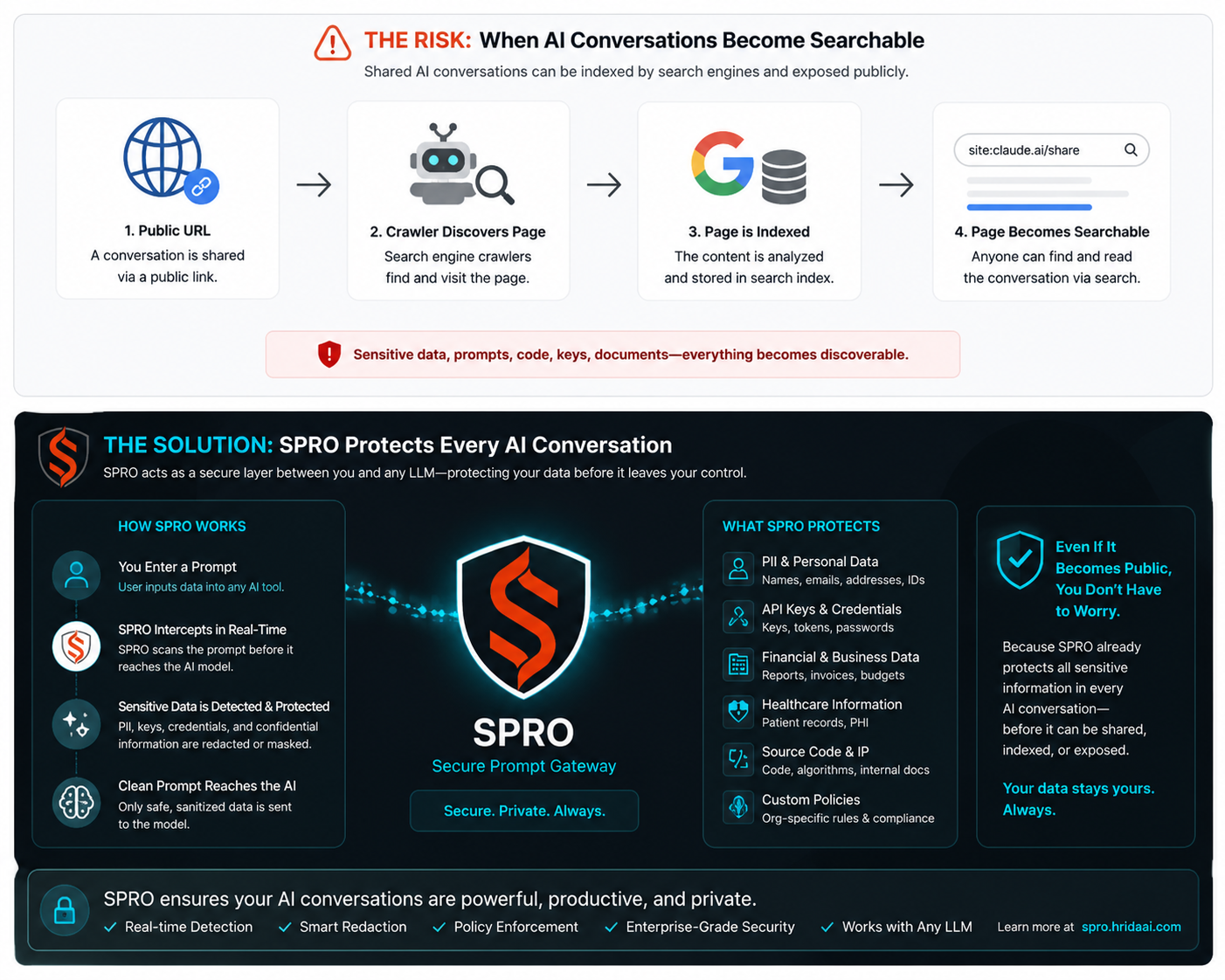
Figure 2. SPRO inspects, detects, and sanitizes sensitive information before prompts are transmitted to any Large Language Model (LLM), ensuring enterprise data remains protected.
Real-Time Prompt Inspection
Every prompt submitted by a user is analyzed before it is transmitted to the AI provider.
Instead of allowing raw enterprise data to leave your environment, SPRO performs deep inspection to identify confidential information such as:
- Personally Identifiable Information (PII)
- Protected Health Information (PHI)
- Financial and banking information
- API keys, access tokens, passwords, and secrets
- Cloud credentials (AWS, Azure, GCP)
- Source code and proprietary algorithms
- Internal documentation and intellectual property
- Customer and employee records
- Legal documents and contracts
- Business strategies and confidential project information
- Organization-specific sensitive data through custom detection policies
Intelligent Redaction & Data Masking
Once sensitive information is detected, SPRO automatically applies configurable protection policies.
Depending on organizational requirements, SPRO can:
- Automatically redact sensitive information
- Mask confidential values while preserving context
- Replace secrets with secure placeholders
- Block prompts that violate enterprise security policies
- Generate sanitized prompts before they reach the AI model
This allows users to continue working with AI assistants without exposing confidential enterprise data.
Before vs After SPRO
| Without SPRO | With SPRO |
|---|---|
| 🔓 Raw Sensitive Data Sent to AI | 🛡️ Sensitive Data Automatically Protected |
📥 User Prompt
Summarize this customer report.

Customer: John Smith
Email: john.smith@company.com
Phone: +1 987-654-3210
API Key: sk_live_xxxxxxxxx
AWS Secret: AKIAIOSFODNN7EXAMPLE
Credit Card: 4111 1111 1111 1111
Internal Project: Project Phoenix
⬇️ SPRO Real-Time Security Layer
- Detects Sensitive Data
- Classifies Data Types
- Redacts or Masks Sensitive Values
- Enforces Enterprise Security Policies
- Sends Only Safe Data to the AI
📤 Prompt Received by the AI
Summarize this customer report.

Customer: [PERSON_NAME]
Email: [REDACTED_EMAIL]
Phone: [REDACTED_PHONE]
API Key: [REDACTED_API_KEY]
AWS Secret: [REDACTED_CLOUD_SECRET]
Credit Card: [REDACTED_PAYMENT_CARD]
Internal Project: [REDACTED_CONFIDENTIAL_PROJECT]
Business context is preserved. Sensitive information is not. The AI still receives the necessary context to complete the task, while the sensitive information never leaves the organization.
Policy Enforcement Across Every AI Platform
Unlike security solutions tied to a single AI provider, SPRO operates independently of the underlying model.
Organizations can enforce consistent security policies across:
- OpenAI ChatGPT
- Anthropic Claude
- Google Gemini
- Microsoft Copilot
- Mistral
- DeepSeek
- Self-hosted and on-premise LLMs
- Custom enterprise AI applications
This ensures the same level of protection regardless of which AI platform employees choose to use.
Protection Beyond the Conversation
The Claude incident demonstrated that conversations can later become public—whether through shared links, accidental exposure, or search engine indexing.
With SPRO, even if an AI conversation is:
- Shared with others,
- Accidentally published,
- Indexed by search engines,
- Exposed through collaboration links, or
- Accessed by an unintended audience,
the most sensitive information has already been detected, sanitized, or removed before the conversation was ever created.
The exposure surface is dramatically reduced because confidential data never enters the AI conversation in its original form.
Enterprise-Grade AI Security by Design
SPRO helps organizations implement AI governance without disrupting employee productivity by providing:
- Real-time prompt inspection
- Automatic PII & sensitive data detection
- Intelligent redaction and masking
- Custom security policies and compliance rules
- Support for text, documents, images, and multimodal AI interactions
- Model-agnostic protection across any LLM
- Enterprise-ready deployment for cloud, hybrid, or on-premise environments
- Centralized visibility into AI usage and data protection policies
Security Should Begin Before the Prompt
Incidents like the Claude search indexing issue remind us that AI models aren't always the weakest link. Data can become exposed through shared links, collaboration features, user behavior, or indexing mechanisms long after a conversation has been created.
The most effective defense is to ensure sensitive information is protected before it ever reaches the AI.
That's the principle SPRO is built on. Rather than trying to control what happens after a conversation is shared, SPRO eliminates the risk at its source by ensuring confidential enterprise data is automatically identified, protected, and governed before it leaves your organization's environment.
The Bigger Lesson
The Claude incident is not evidence that AI platforms are inherently insecure.
It is a reminder that sharing mechanisms, human behavior, and data governance matter just as much as the underlying model.
As AI becomes the interface for enterprise work, organizations need to think beyond model accuracy and performance.
They need to ask:
What happens to our data before, during, and after every AI interaction?
Because in the age of generative AI, protecting prompts is just as important as protecting databases.
And that's exactly why solutions like SPRO exist, to ensure your organization's sensitive information stays secure, compliant, and under your control, regardless of which AI model your teams use.
🚀 Explore SPRO
Ready to secure your AI conversations?
Learn how SPRO protects sensitive data across any AI platform with real-time prompt inspection, intelligent redaction, policy enforcement, and enterprise-grade AI security.
🌐 Learn More
- 🛡️ SPRO Product: https://spro.hridaai.com/
- 📚 Technical Blogs & Research: https://www.hridaai.com/blogs/spro
Protect your prompts. Protect your data. Protect your enterprise.