Everyone wants to build an AI agent. But only a few realize how expensive it can be to run one at scale. We're deep in the "let's build an agent" era of enterprise AI.Every SaaS roadmap has one. Every enterprise AI strategy references one. Agentic AI has quickly become a standard part of almost every AI product roadmap. And from the outside, agent development looks deceptively simple.
Pick a model. Give it some instructions. Connect it to a few tools and data sources. Add a decision loop so it can reason, act, observe, and repeat.
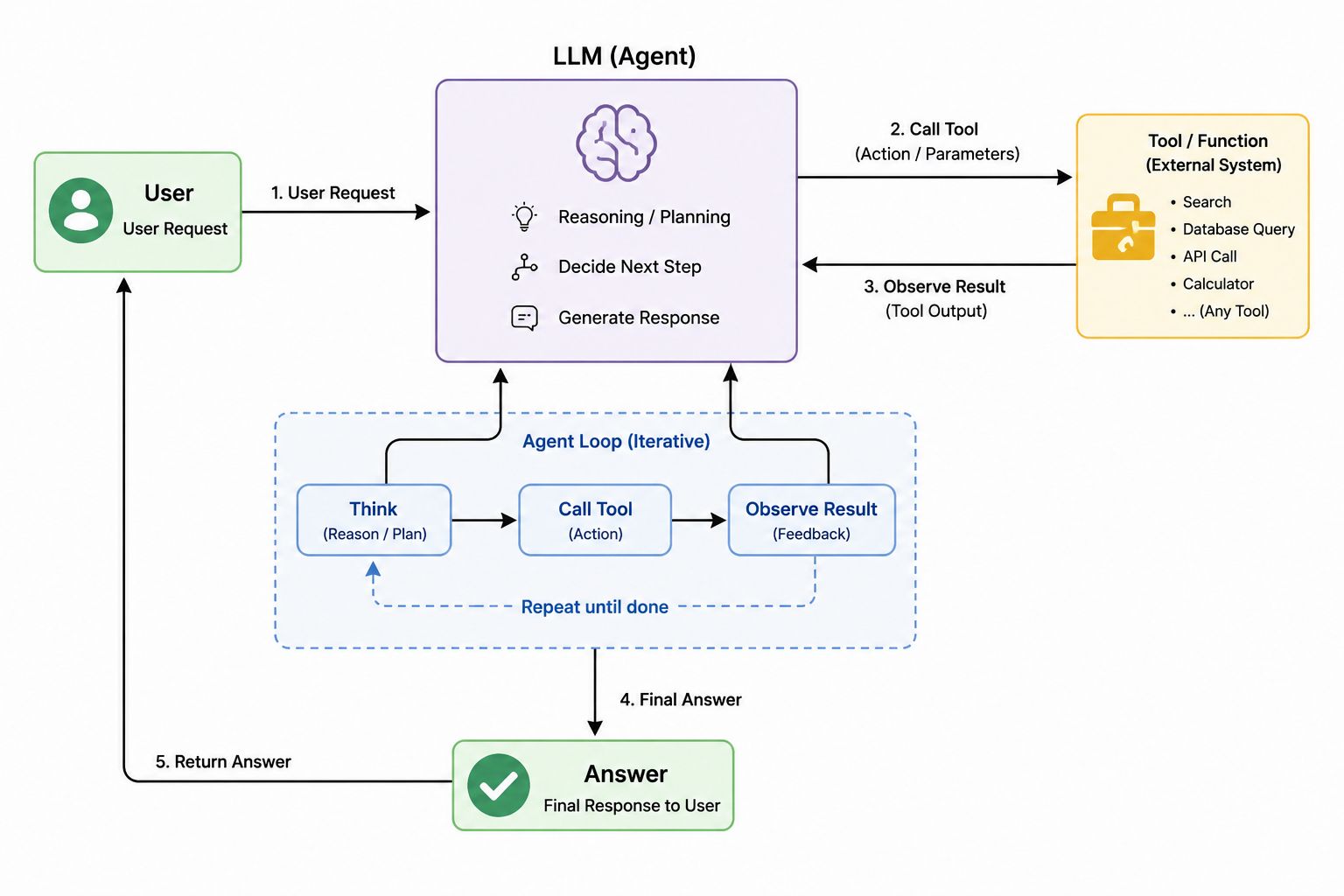
Congratulations! you've shipped an AI agent demo.
And that's enough to build an impressive demo. But a demo isn't a production system.
The difficult part begins when that same agent has to handle 10,000 real requests instead of the 10 scenarios you tested internally.
Real users are unpredictable,Company data changes,Models behave differently,Prompts evolve,Context grows,Access control matters,Tokens cost money,Agents get stuck in loops and occasionally the model confidently does something nobody expected.
That gap is where the real cost of agentic AI hides and as infrastructure demands, compute consumption, operational overhead, and engineering complexity increase at scale.
Recent industry findings
Recent industry findings reveal a growing gap between experimenting with AI agents and operating them successfully at scale.
Gartner predicts that more than 40% of agentic AI projects will be cancelled by the end of 2027, citing escalating costs, unclear business value, and inadequate risk controls.
McKinsey's 2025 State of AI report found that while 62% of organizations are already experimenting with AI agents, most still haven't reached enterprise-wide AI scale.
Stack Overflow's 2025 Developer Survey tells the same story from the engineering side:
- 87% of developers are concerned about AI-agent accuracy.
- 81% are concerned about security and privacy.
Microsoft Research studied token consumption across eight frontier models performing agentic coding tasks and found that agentic workflows could consume roughly 1,000 times more tokens than conventional code reasoning and code-chat interactions.
Why?
Because an agent doesn't simply answer once.
It plans, It reads context, It reasons, It calls a tool, It reads the result, It reasons again, It may call another tool, It may discover that the first approach failed, Then it loops. And every loop costs something.
Even more striking, Microsoft researchers found that two executions of the same task could differ by as much as 30× in total token usage.
And higher token consumption didn't automatically mean higher accuracy. In many cases, performance eventually plateaued while the agent simply continued consuming compute. That's the economics of agentic AI that doesn't show up in the demo.
A chatbot gives you an answer. An agent gives you a runtime.
And runtimes need:
- budgets
- stopping conditions
- model routing
- caching
- monitoring
- retries
- cost controls
So the real question was never:
"Can we build an AI agent?"
We can. The real question is:
"Can we build one we can trust, monitor, debug, secure and actually afford to run at scale?"
That's a fundamentally different engineering problem. And it's the one most teams underestimate.
The "Simple Agent" Illusion
One of the reasons this problem is underestimated is that modern AI infrastructure has made prototypes incredibly easy to build. You can use an agent framework,You can write your own orchestration layer, You can use a managed AI platform,You can connect directly to model APIs, You can build workflows visually. The implementation doesn't really change the fundamental problem.
Eventually, most useful agents need some combination of: Models, Instructions, Context, Memory, Tools, APIs, Business rules, External data, Permissions, State and Validation
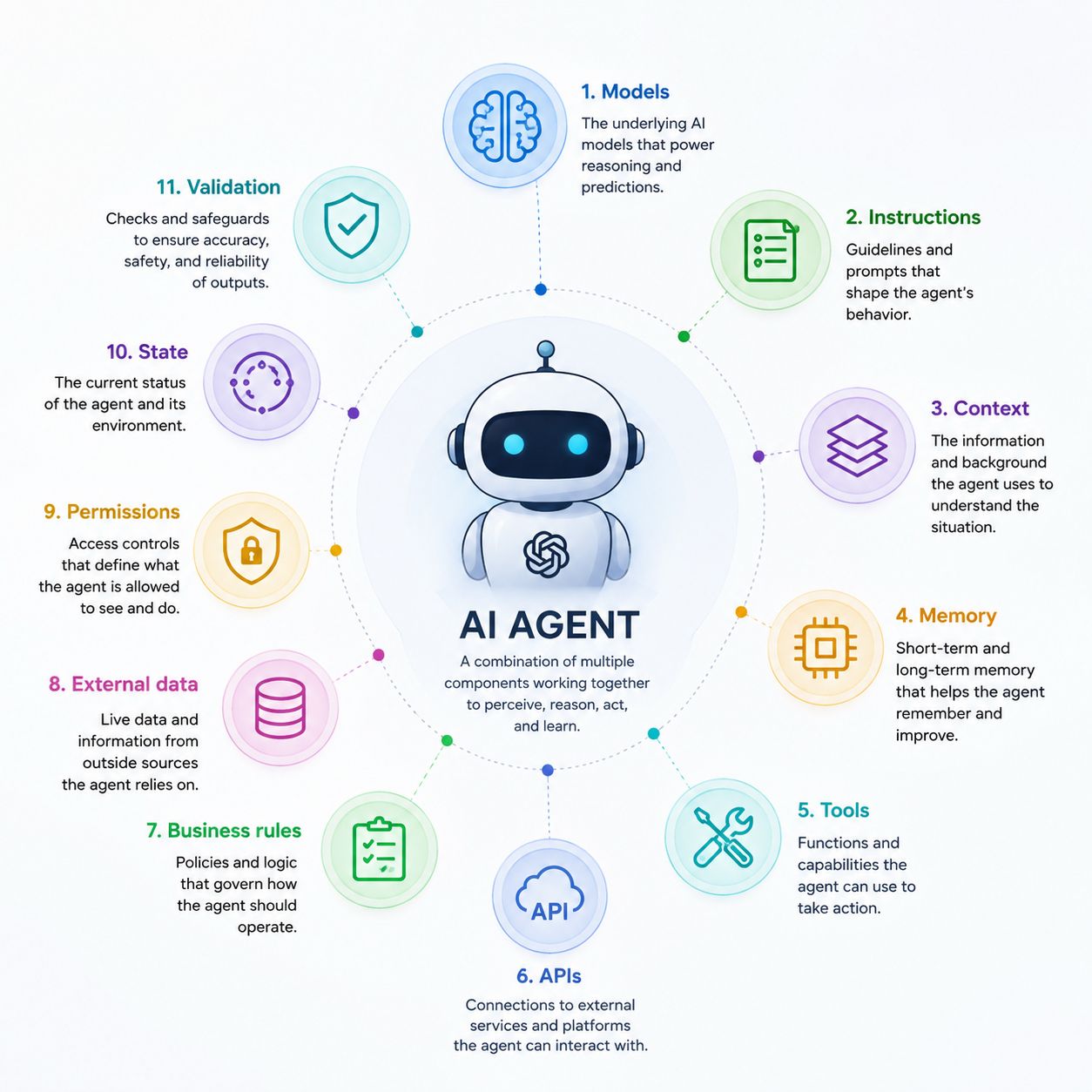
The prototype might still be surprisingly small. But less code doesn't mean less complexity. It often means the complexity has moved somewhere else. Consider a customer-support agent with access to:
- a customer database
- an order system
- a logistics provider
- a refund service
- a knowledge base
- CRM
Now give it one seemingly straightforward request:
"My order hasn't arrived. Check what happened and refund it if it's lost."
That sentence contains an entire workflow.
The system may need to:
- Identify the customer.
- Retrieve the correct order.
- Verify permissions.
- Check shipping status.
- Interpret the carrier response.
- Determine whether the order qualifies as lost.
- Check the refund policy.
- Potentially ask the customer a question.
- Initiate a refund.
- Update internal systems.
- Send confirmation.
And it has to do those things in the right order.
Now imagine the shipping API times out halfway through Or the refund API succeeds but the CRM update fails Or the customer has two orders with similar IDs Or the model misunderstands "refund it if it's lost" and initiates the refund before verifying the carrier status.
At that point, you aren't dealing with a clever prompt connected to an LLM anymore.
You're operating a distributed software system with a probabilistic decision-maker inside it.
And that changes everything.
1. Context Engineering: Your Agent Is Only as Smart as What It's Fed
One of the biggest myths in AI agent development is that intelligence lives entirely inside the model.
In production, an agent is only as effective as the information it receives: Context engineering.
What does the model actually see before it decides what to do? A real-world AI agent stack might assemble:
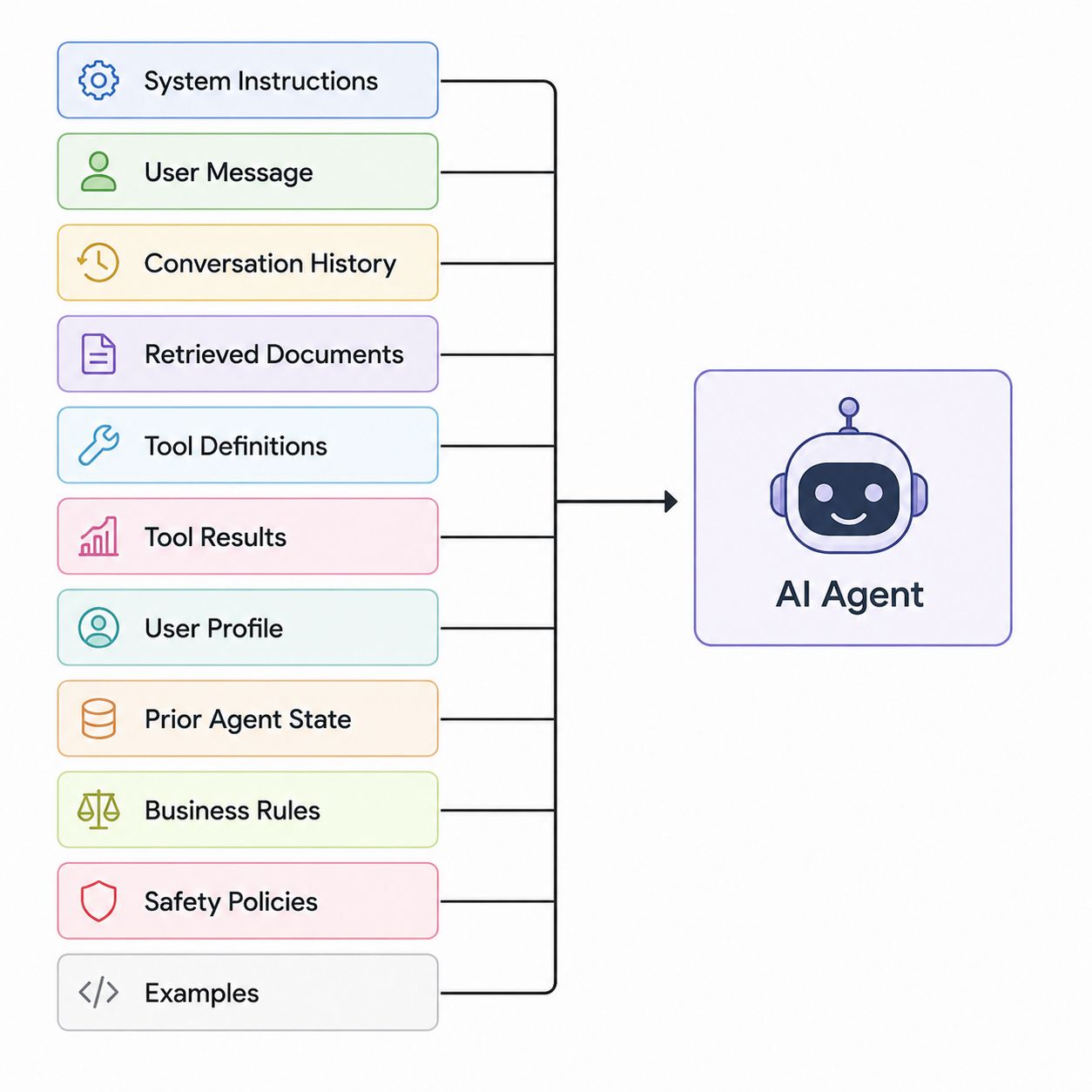
That's not a "prompt" anymore. It's a dynamically constructed information environment, rebuilt on every turn. And bad context breeds bad agents.
Stack Overflow's research found 63% of developers cite AI tools lacking context about internal codebases, architecture, and institutional knowledge as a top concern.
For agentic AI, this problem compounds fast, because the model isn't just generating text. It's making decisions and taking action.
Wrong Context
      ↓
Wrong Reasoning
      ↓
Wrong Tool
      ↓
Wrong Action
Someone now has to engineer:
- retrieval pipelines
- ranking
- context windows
- summarization
- permissioning
- history management
- state
None of which showed up in the original demo.
2. Prompt Maintenance: Your Prompt Just Became Production Code
Most AI agent projects start with something clean and simple:
"You are an intelligent customer support agent. Understand the user's problem and use the available tools to resolve it."
Then production reality sets in.
And the prompt starts absorbing business logic.
If customer is enterprise → follow Policy A

If refund > $500 → require approval

Never expose internal IDs

Never cancel before confirmation

If CRM is down → create a retry task

If confidence < threshold → escalate to a human

For EU customers → apply GDPR workflow

For healthcare data → block external tool access

If tool response is incomplete → retry once

Never auto-retry payment operations
Congratulations! again your prompt is quietly turning into a programming language.
Except it has:
- no compiler
- no type checker
- nothing to warn you that Rule 14 just contradicted Rule 31
That means prompts now need everything real software needs: Versioning, Testing, Regression suites, Evaluation datasets, Rollbacks, Change logs, A/B testing.
Prompt engineering eventually becomes prompt maintenance And maintenance is where software gets expensive.
3. Model Switching Isn't Just an API Key Swap
The common assumption:
"We'll use GPT today, and switch to whatever's cheaper tomorrow."
In theory, sure. In production, rarely that simple.
Different LLMs behave differently across:
- Tool calling
- Structured outputs
- Reasoning style
- Latency
- Context limits
- Safety behavior
- Pricing
Even model upgrades can quietly shift behavior underneath you. That's why mature multi-model AI architectures increasingly look like this:
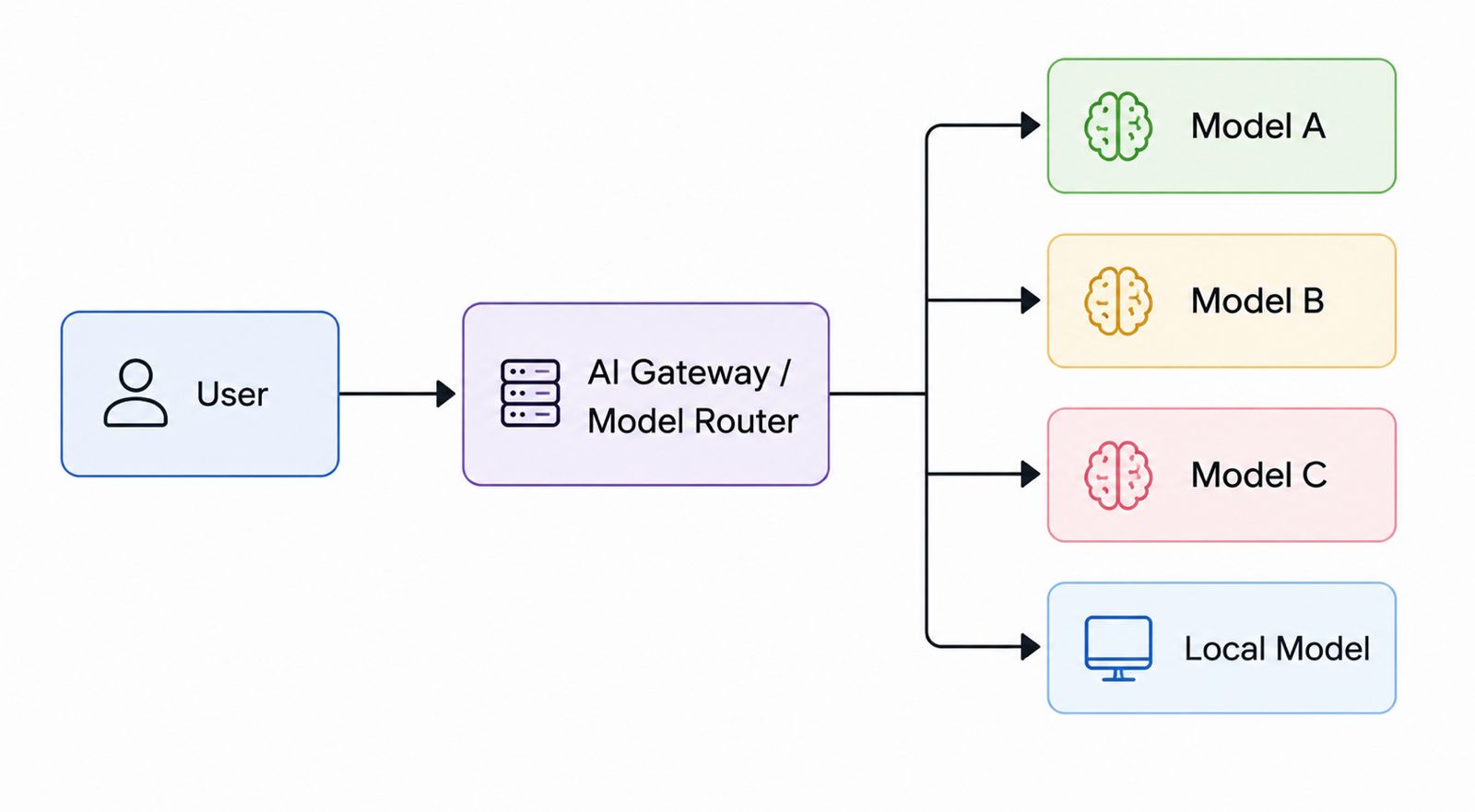
Then comes the routing logic:
- Cheap models for classification.
- Powerful models for reasoning.
- Local/private models for sensitive data.
- Automatic fallback when a provider goes down.
- Dedicated routing for long-context tasks.
What sounded like "model flexibility" is really another full infrastructure layer.
And that layer needs its own: Testing, Observability, Routing rules, Fallback mechanisms, Maintenance.
LangChain's 2026 State of Agent Engineering survey found that using multiple LLMs has become the norm among agent builders.
The future of agentic AI isn't one agent bound to one model.
It's agents operating across a constantly shifting model layer.
4. Hallucinations Get Dangerous the Moment AI Can Act
A hallucinating chatbot is annoying. A hallucinating agent is expensive.
A chatbot saying:
"Your refund has been processed."
when it hasn't is a bad UX moment.
An autonomous agent deciding a transaction "qualifies for a refund" and actually firing:
POST /refundis a financial incident.
Stack Overflow found 46% of developers actively distrust AI output accuracy, versus just 33% who trust it. Only 3% report high trust.
66% of developers say their top frustration is AI producing answers that are "almost right, but not quite."
That's exactly the failure mode that makes autonomous agents risky. A completely wrong answer is easy to catch, An almost-right one slips through.
Production-grade AI agents therefore need Confidence scoring, Grounding , Output validation,Structured schemas, Business-rule verification, Tool-result verification, Fallback logic and Human escalation paths
The real cost of hallucination is the guardrail infrastructure required because hallucinations are highly possible.
5. Human-in-the-Loop Doesn't Disappear : It Relocates
The pitch-deck dream:
Human Work → AI Agent → Full AutonomyThe production reality:
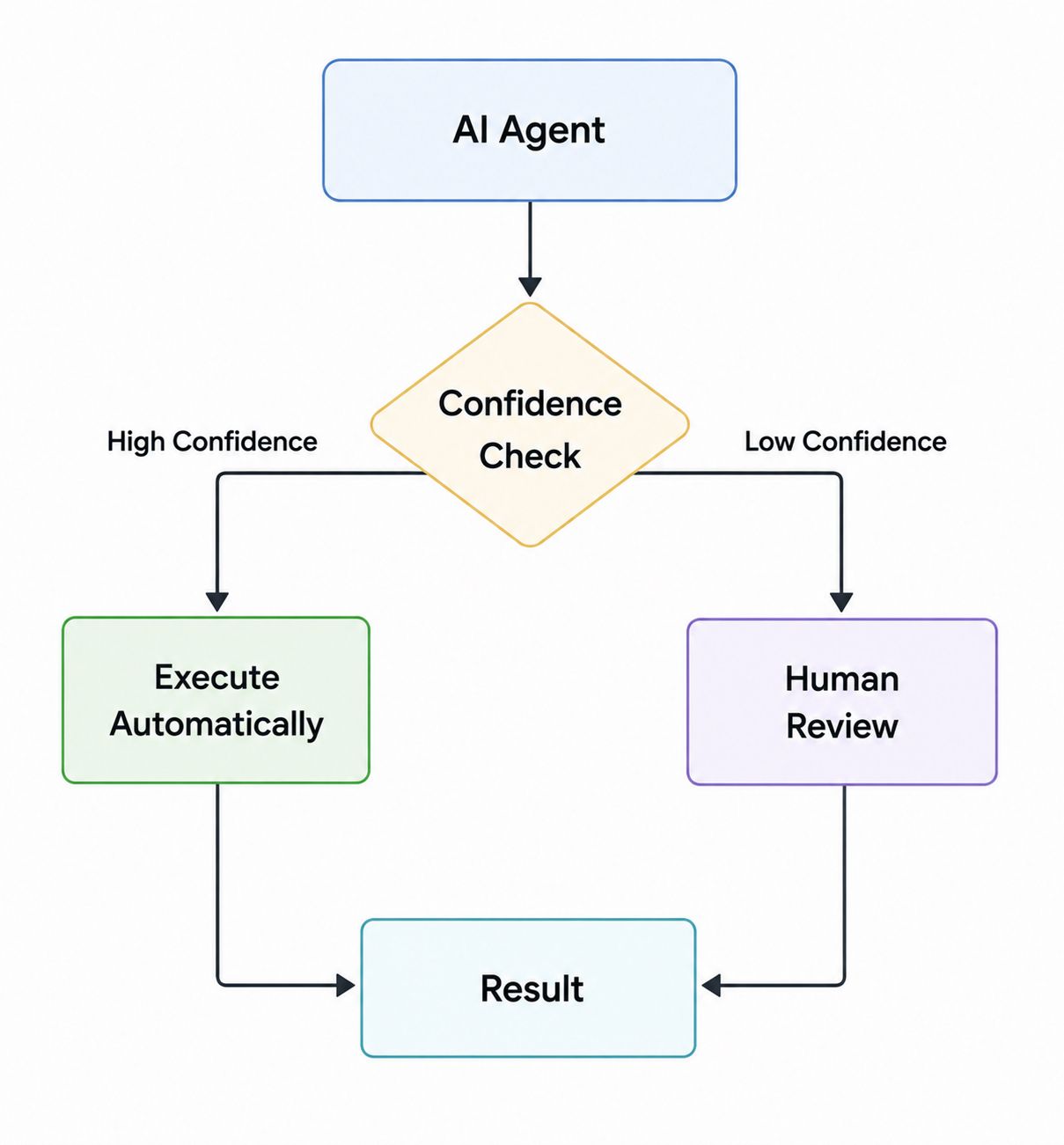
This is human-in-the-loop AI.
And despite all the autonomy marketing, humans stay firmly in the architecture.
75% of developers told Stack Overflow they'd still want a human's input when they don't trust an AI's answer. Low-risk tasks can run fully autonomous.
But anything that deals with:
- Money
- Healthcare
- Legal decisions
- Employee actions
- Customer accounts
- Security
- Contracts
still needs human sign-off. Your AI agent may not eliminate operational cost at all. It may just relocate where your team spends its time.
6. Observability: "Why Did the Agent Do That?"
Traditional software gives you a clean log line:
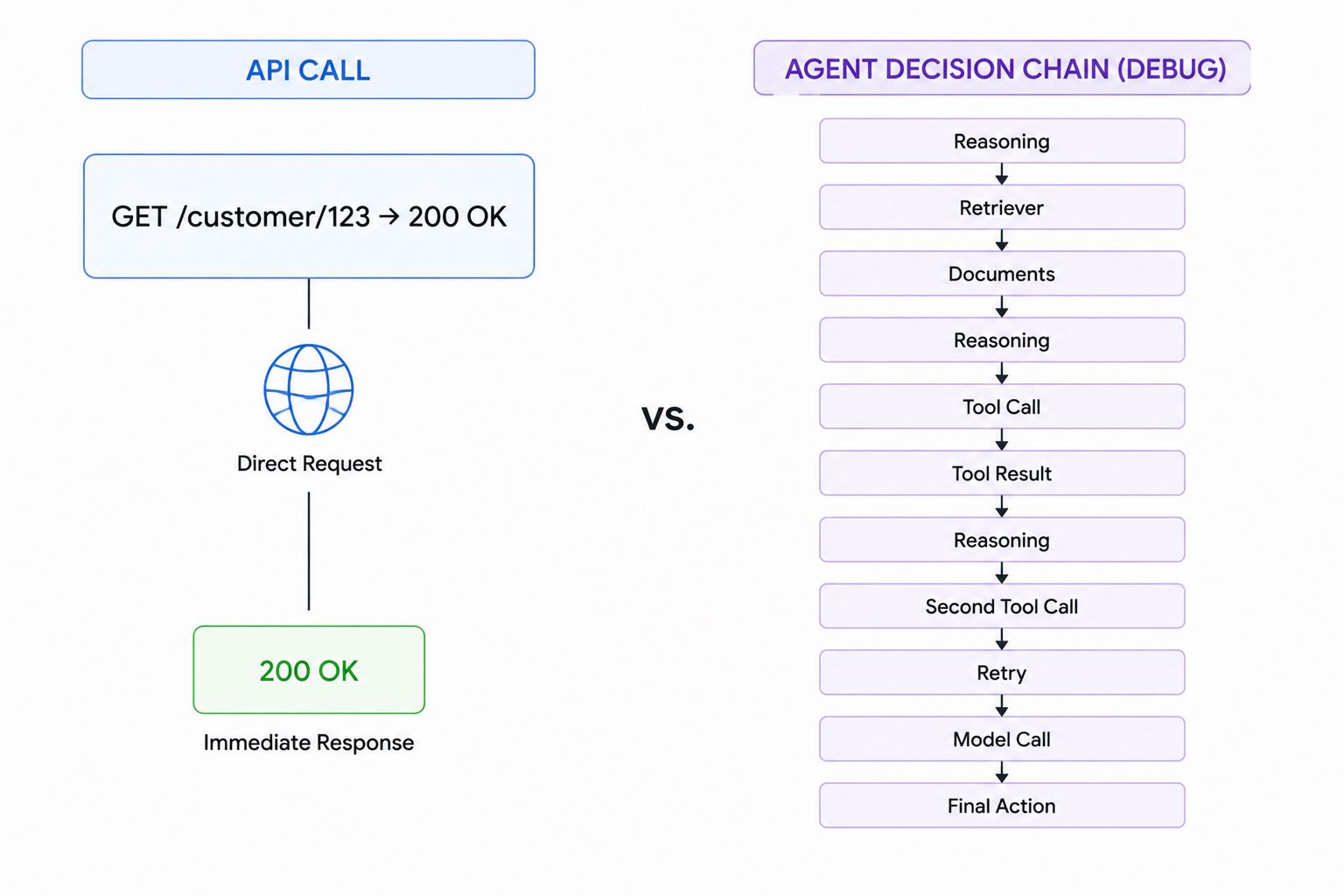
When something breaks, you need to know exactly:
Which prompt version ran?, Which model handled it?, What context was it given?, Which documents got retrieved?, Which tools were available?, What arguments did it generate?, How many tokens did it burn?, How long did each step take?, Did a retry fire?, Did a fallback fire?
This is why AI observability has become a core layer of agent infrastructure.
LangChain's 2026 survey found:
- 89% of teams have implemented some form of agent observability.
- That rises to 94% among teams already in production.
- 71.5% report full tracing capability.
For production AI agents, monitoring isn't a dashboard you bolt on later. It's part of the product.
7. Agent Memory Is a Database Problem Wearing an AI Costume
Everyone wants an agent that:
"Remembers the customer."
Fair enough But remember what, exactly?, For how long?, What happens when it goes stale?, What if two memories contradict each other?, What if the user requests deletion?, What if the agent stores something sensitive?
"Memory" quietly fractures into: Short-term memory, Conversation memory, Long-term memory, Semantic memory, User preferences, Task state, Entity memory.
All backed by real databases requiring: Retention policies, Access controls, Encryption, Deletion pipelines, Deduplication, Conflict resolution, Lifecycle management.
AI memory sounds futuristic.
In production, it's mostly data engineering with serious privacy stakes attached.
8. Token Explosion: Your Agent Isn't Making One Model Call
This catches teams off guard late.
Usually on the first big invoice.
A chatbot is one call, An agent is a chain And every step can resend: System prompt, Conversation history, Retrieved context, Tool definitions, Prior results, Agent state.
That's how token usage scales far faster than request volume.
And agentic loops make it worse:
while not task_completed:
    think()
    call_tool()
    observe()
This is exactly why the following matter at scale:
- Prompt caching
- Context pruning
- Summarization
- Model routing
- Hard execution limits
Even model providers are building around this.
OpenAI's prompt caching, for instance, launched with up to 50% lower pricing on cached input tokens.
At agent scale, caching isn't optimization. It's survival.
It's a unit-economics feature.
9. Your Vector Database Isn't "Set It and Forget It"
The RAG pipeline looks clean on a whiteboard:
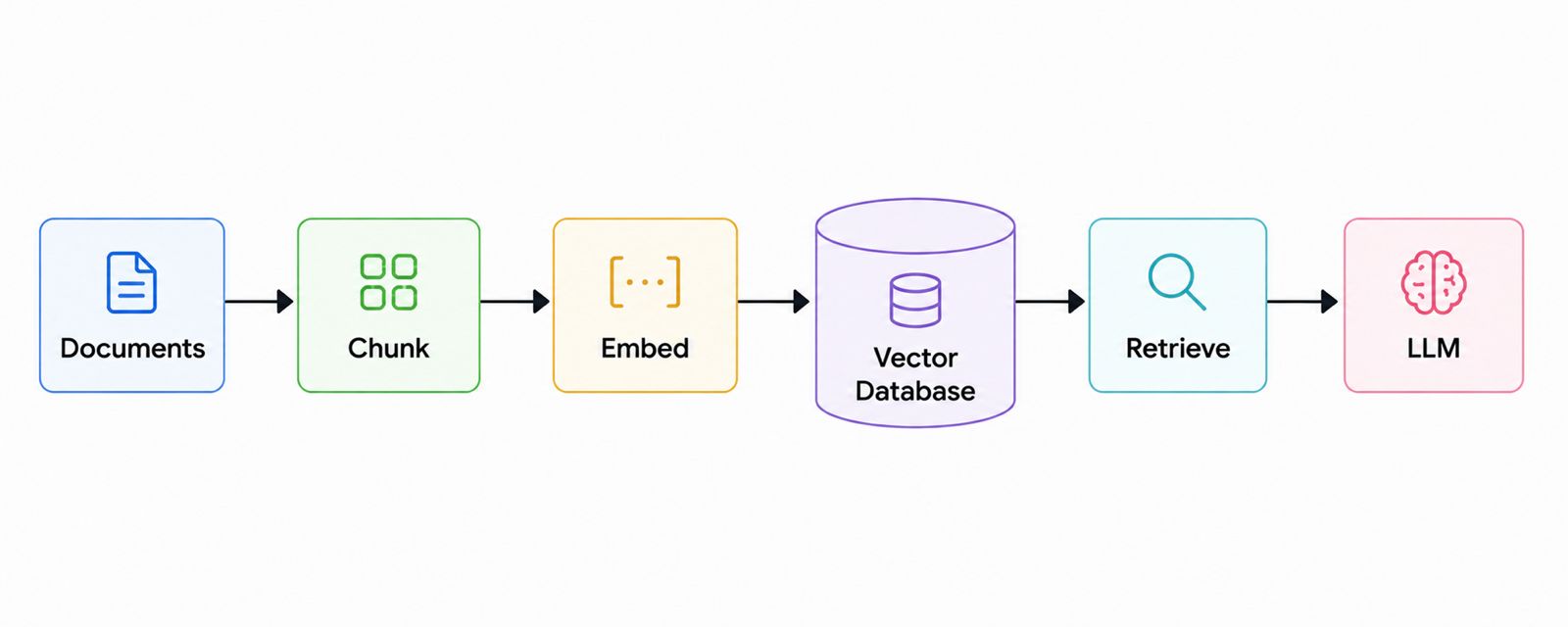
Production is messier, Documents change, Permissions change, Embedding models get upgraded, Duplicates creep in,Chunks go stale,Metadata drifts And users should only ever retrieve what they're authorized to see.
That means: Re-indexing, Embedding migrations, Metadata filtering, Access control, Freshness policies, Deduplication, Chunking evaluation, Retrieval evaluation, Backups.
That's a full RAG maintenance program, not a one-time setup.
Cisco's 2024 AI Readiness Index found 80% of organizations report inconsistencies in data preprocessing for AI projects, with only 32% reporting high data readiness.
RAG doesn't fix messy enterprise data.
It just makes it easier for the model to find.
10. Tools Fail : And Your Agent Needs to Know What That Means
An agent is only as reliable as the systems it touches:
CRM, Payment APIs, Search, Databases, Email, ERP, Internal services.
Every integration is another failure mode:
Timeouts, Rate limits, Expired tokens, Invalid schemas, Downtime, Partial responses, Permission errors, Unexpected formats.
But the harder question is:
What should the agent do after failure?
Retry? Switch tools? Ask the user? Escalate? Stop entirely?
Reliable agentic AI still needs boring, battle-tested distributed-systems engineering:
Timeouts, Retries, Circuit breakers, Idempotency, Fallbacks, Schema validation, Permission checks, Error classification.
AI doesn't remove the need for distributed-systems engineering.
It stacks probabilistic decision-making on top of it.
11. Versioning Gets Genuinely Weird
Traditional software tracks one version number.
An AI agent depends on a stack of them:
Agent Code Version
        +
Prompt Version
        +
Model Version
        +
Embedding Model Version
        +
Knowledge-Base Snapshot
        +
Tool Schema Version
        +
Retrieval Config Version
        +
Safety-Rules Version
Without disciplined versioning, reproducing an agent failure becomes genuinely difficult.
This is why AI engineering is starting to look less like prompt engineering and more like:
Configuration management for probabilistic systems.
12. Compliance: The Line Item Nobody Wants to Think About Early
The least exciting part of any AI architecture is often the one that matters most in production: governance, security, and compliance.
If your agent handles customer data, financial records, health information, employee data, contracts, or internal documents, these concerns become part of the architecture from day one.
IBM's 2025 Cost of a Data Breach report highlights the risk:
63% of breached organizations lacked AI governance policies, while 97% of organizations that experienced an AI-related security incident lacked proper AI access controls.
IBM also found that extensive use of shadow AI added as much as $670,000 to the average cost of a data breach.
This isn't just paperwork or a compliance checklist. It's an engineering requirement.
It influences model selection, logging, storage, memory, encryption, permissions, infrastructure, data residency, human review, and audit trails.
And just like many of the hidden costs of agentic AI, none of this appears in the 10-line agent tutorial.
Conclusion
Building an AI agent is easy. Building one that works reliably in production is an engineering challenge.
The real cost of agentic AI goes far beyond model usage. It comes from everything required to make the agent dependable at scale: context engineering, prompt maintenance, model routing, observability, memory, RAG pipelines, tool reliability, security, compliance, human oversight, and cost controls. As the blog shows, each of these becomes its own production concern once an agent moves beyond a controlled demo.
The goal, therefore, shouldn't be to build the most autonomous agent. It should be to build the right level of autonomy with clear boundaries, predictable costs, strong guardrails, and the ability to understand what the system is doing when something goes wrong.
Because ultimately, the question isn't whether we can build AI agents.
It's whether we can build AI agents that we can trust, operate, secure, and afford at scale.